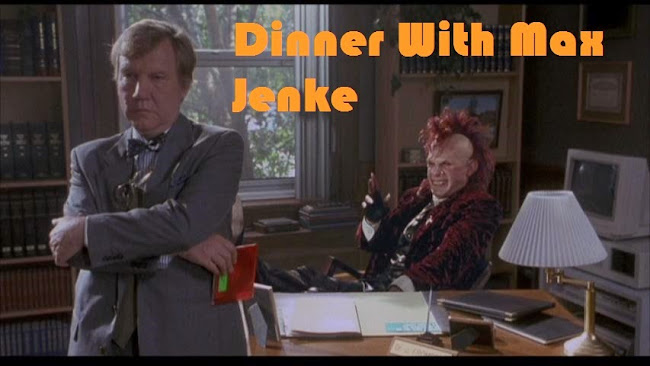
Hey, I had a blast looking back on the many ups and downs of the Halloween series for this year's round of Trick or Trailers but I'll close out by giving the last word over to someone who fought the boogeyman head on, who got in his face, who walked in his house like he owned the place, and yet still lived to tell the tale, the head of Dangertainment himself, Freddie Harris:
"...Michael Myers is not a sound bite, a spin-off, a tie-in, some kind of celebrity scandal. Michael Myers is a killer shark in baggy-ass overalls that gets his kicks off of killing everything and everyone that he comes across. That's all."
Even though there'd been many times over the years when it looked like Halloween had as much life left in it as a rotting jack o'lantern, it was probably inevitable that in time the franchise would land in the hands of horror fans turned pros who would be primed to fulfill the series' promise in a way that previous filmmakers hadn't, that eventually Halloween wouldn't just be lurching clumsily from one film to the next.
By rights, Dimension Films should have been an ideal home for Michael Myers but in the end it ended up yielding the usual uneven stretch of films, some of them the most reviled of the series. For all the bad luck the franchise has suffered over the years, you'd think its namesake holiday was Friday the 13th. But in 2016 it looked like things might finally turn around once it was announced that the next Halloween would involve genre powerhouse Blumhouse Productions.
In time for the series' 40th anniversary, Halloween continuity would once again be rewritten, with the new film now stemming solely from the events of the original Halloween, discarding everything afterward, finally untethering Halloween from its first sequel.
For years, II was piggybacked onto Halloween, due to its storyline picking up immediately from the end of the original. The two were seen as one seamless story, detailing the events of Halloween night, 1978. And because of that, every sequel had to contend with the misguided reveal in II that Michael and Laurie were siblings. Now, the series was free to forge a new direction that wasn't about Michael obsessed with killing his other sister and the rest of his bloodline.
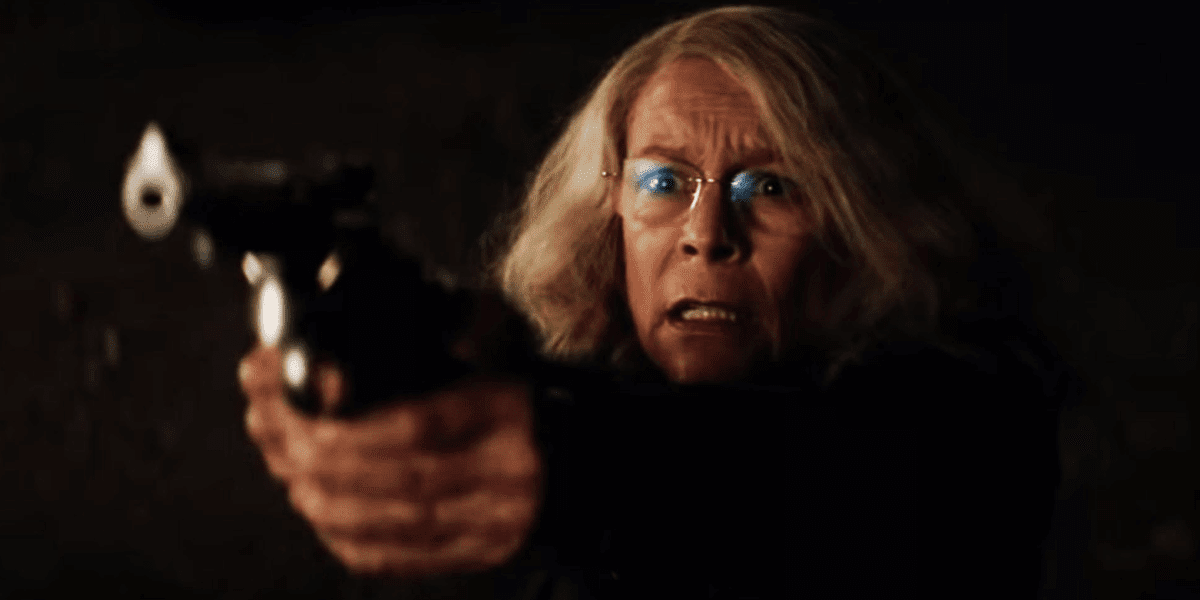
And with Jamie Lee Curtis back again as Laurie, there was a fresh chance for her to give the character a more fitting final bow than she received in Resurrection.
The trailer was about as good as you could possibly ask for:
Right off the bat this looked like the best return for Michael since H20 and upon its release, the consensus was that, yeah, for the most part they nailed it. Director and screenwriter David Gordon Green and his co-writers Jeff Fradley and Danny McBride and the rest of their Blumhouse collaborators relaunched Halloween in style, complete with a new score from John Carpenter and his son Cody.
And now we have the just released Halloween Kills, the second chapter in Green's Halloween trilogy, originally meant to hit theaters in 2020 but delayed until this year due to Covid.
When the trailer hit, it looked well worth the wait:
Woo, that looked like it was gonna be brutal! And as it turns out, it was! Some trailers promise a lot and the movies don't deliver but Kills gave me everything the trailer set me up for. Namely, a massive body count. Even for this jaded slasher buff, the kills in Kills were insane.
These films are way too new to say for certain how they'll stand up over time, especially as we still have yet to see how the trilogy ends, but as time has softened my views of even the shittiest Halloween sequels, I feel confident that these movies will age just fine. At this point, even if the last film tanks, I'll be happy with the two we got.
I know Kills rubbed some fans wrong but from my perspective it rocked. Not only did it rock, it fixed my issues with the previous film.
Even though Halloween '18 established that Laurie and Michael weren't related, the movie still turned on the idea that it was all about Laurie vs. Michael and it felt like the plot shoehorned that confrontation in, facilitated by an out of left field plot twist involving Michael's psychiatrist.
At a certain point in Halloween '18, there was that need to physically transport Michael from point A to point B so that big confrontation between he and Laurie could play out but the plot mechanism to make that happen was so awkward and it seemed that if that was where the movie was obviously going, if Michael's mission was always to get to Laurie, why couldn't it have been done in a smoother way?
However, in Kills, it is established that Michael never gave a shit about facing Laurie again. Bringing Michael and Laurie together again was all to do with his psychiatrist's obsession and for all the preparing that Laurie did in her certainty that Michael would one day come back to finish the job, we understand now that he didn't care at all.
He would have been perfectly fine never seeing Laurie again. His impulse is simply to kill. The scenes in '18 where he is just going into random houses and killing people felt like filler to me at the time, just scenes to pad out the body count, spinning wheels until the movie could get us to that big final act with Laurie and Michael. Now, in light of Kills, those scenes feel right to me. That was what Michael cared about. It was only his psychiatrist that forced him off course.
As fans we've been as conditioned as Laurie to believe that Michael has a special, singular obsession for her, even if they weren't related. This movie makes it absolutely clear that, no, Laurie is not special to Michael.
You could say that Halloween '18 already did that but we don't fully feel it there because that movie is so rooted in Laurie's perspective.
Laurie believes that Michael is coming for her and, because of the history of the franchise, we believe it too. If anything, I thought it was a weakness of '18 that Michael was so passive about getting back to Laurie, that he was manipulated into facing her again rather than choosing to go after her. As it turns out, that was the whole point.
Laurie's belief that Michael was planning to come for her was given superficial credence by the actions of Michael's psychiatrist but that was his machinations, not Michael's.
For Laurie, and us, to realize that killing her is no more important to Michael than murdering the next ten random people he encounters is a major corrective move. It liberates the series from the bad baggage it's been carrying since 1981.
Since Halloween II, the sequels have been trying to explain Michael.
It is the single biggest mistake the series made. It instantly put the sequels on the wrong foot, and, until now, the subsequent films acted as though they were obliged to forever perpetuate that mistake.
It's ok for us to get where Jason is coming from. He's protecting his turf, he's avenging his mother, he's punishing misbehavior. Whatever.
All of that is fine. It doesn't take away from the fun of the character to know all that. The fun of Jason and the scariness of him is knowing that if you set foot in his territory, he's going to get you.
And with Freddy it's also not detrimental for us to have the full picture on him. He was a sick fuck, the parents of his victims got themselves some street justice and the children have to pay for the sins of the parents. But Michael is a character that works best when we have no idea why he does what he does, when he is a blank.
There's a lot of overripe dialogue in Kills from both Laurie Strode and Tommy Doyle concerning Michael. I think that's fine and fully in line with Halloween tradition. They're referring to Michael in the same kind of hyperbolic terms that Loomis used to. Some may roll their eyes when Tommy urgently tells a crowd that Michael is an "apex predator" but I love it. That's some prime Halloween shit right there.
Past all the talk about evil and transcending, though, Kills has the single best line of dialogue spoken about Michael in the whole series, save for the classic Loomis lines from the original. When Robert Longstreet as Lonnie says about Michael that "he creeps, he kills, he goes home," it's a statement so unsettling in its utter plainness. It describes Micheal in the simplest terms but rather than reduce him, it only affirms his essential sense of mystery. "He creeps, he kills, he goes home" should be the mantra that any future caretakers of Michael Myers should be guided by once Green and co. are done.
Given how well Kills addressed my issues with Halloween '18, I hope that's reason to believe that Green has had a solid final chapter mapped out from the start. Right now, they're two for two in my opinion. A kick ass third film would be pure Halloween heaven.
In 2009, the good times kept rolling with Rob Zombie's sequel to his successful 2007 Halloween reboot. Unhappy Childhood Michael was back and looking to bring the pain again. Everything seemed to be in place for another hit. But it turned out Rob Zombie had other plans.
In the franchise's cursed tradition of taking one step up, two steps back, Zombie's Halloween II - or H2 - delivered the latest death blow to the series with a sadistic, psychedelic installment that served as a turn off to many who had enjoyed his first Halloween.
The producers had clearly kept a firm hand on Zombie during the remake but when they gave him the sequel, they let him loose.
Whether that was wise or just another example of the kind of self-sabotage that has always plagued the franchise, is up to individual viewers to decide.
Let's take a look at the trailer and see what was supposed to hype us:
Watching at this trailer for the first time since the theaters, this looks to me like the clear tail end of that particular era of horror.
Hardcore suffering was the order of the day back then, a long ugly streak that started in 2003. But by 2009, I think the appetite for that was finally starting to wane. After awhile, enough is enough.
Zombie's first Halloween was certainly no walk in the park but H2 looked to be an even nastier, more ponderously grim affair. Is that what people wanted? Guess not. I know I wasn't excited for it.
My main issue with H2 is tied in with why Zombie's first Halloween wasn't for me - I'm not down with the idea of Michael Myers just being a dude who was shaped by a shitty childhood to grow into a psycho.
If there isn't a supernatural component to Halloween, I don't care.
Jason as just some backwoods psycho who's just hard to kill? Sure. I arguably prefer that version to Zombie Jason. But Michael? Always gotta be supernatural. It doesn't have to go into Druids and Cult of Thorn territory. You can even keep the Samhain shit. But he has to be a true boogeyman.
The promise that in this second Zombie Halloween entry "the secret behind (Michael's) madness will finally be revealed" was not enough to compel many audiences to check this out. For a guy who had the opportunity to break free of all the shit that had hindered the other sequels, Zombie sure was happy to repeat those previous mistakes.
Making Michael and Laurie siblings? Check. Try to explain Michael's motivations? Check. Stylistic choices aside, there was not much thinking outside the box in Zombie's entries. And in the end, after just two movies, the franchise was once again looking for a re-do.
This sequel definitely has a fanbase, though. Maybe one that's separate even from Zombie's first Halloween. There's something about the trashy trippiness of H2 that really works for some people.
Knowing how so many like it is almost enough to make me want to give it another try but nah. I'm cool that others found something to love about it. Not every movie, not even every Halloween movie, has to be for me.
On the upside, everyone can agree this did have a cool horse in it.
Remaking Halloween is an idea that came one film too late for the series. Starting over after H20 would have made much more sense rather than trying to carry on. Still, in 2002 the idea of remaking Halloween would have likely been greeted as heresy. Remakes of movies from the olden times of the '50s or '60s, fans were cool with that. But to start remaking the iconic fright films of the '70s? No way.
That just wasn't going to happen.
Until it did.
As the '00's went on, and horror exploded in the wake of films like Saw and Hostel with a renewed emphasis on the kind of hardcore, visceral thrills that defined much of '70s horror, suddenly once unthinkable remakes of everything from Dawn of the Dead to The Texas Chain Saw Massacre to The Hills Have Eyes became a reality.
Once that dam burst, it was inevitable that the next step in reviving the Halloween franchise would be to reboot it. I forget what my reaction was to hearing that Rob Zombie would be directing the new movie. At that point, he had directed only House of 1,000 Corpses, which I absolutely hated, and The Devil's Rejects, which I thought was much better, even if it wasn't really my thing. If nothing else, Zombie was definitely a choice in perfect tune with where the genre was then. House, along with Cabin Fever and Wrong Turn, was one of the first films to start the trend towards a return to '70s style horror.
But how would this guy handle a retelling of Halloween, a model of classic suspense? The answer is that he would just make it entirely in his own fashion and fuck it with even trying to ape Carpenter.
Even though this is not that old, watching this trailer, it feels further in the past to me than Resurrection from '02 does. Maybe it's just that the style of horror from the mid to late '00s was so specific to that era that it's strange to revisit it and be reminded of that vibe.
From the trailer, seeing Malcolm McDowell in action as Loomis, it's clear - as if anyone could doubt it - that casting him in that role was a killer move. You can't better Pleasance, no, but if you've got to go with a second choice, McDowell is perfect. Even in '78 he would have been great.
As for Tyler Mane as Michael, well, I say it's a very on brand choice. Of course Zombie would cast Michael as a hulking monster. Nothing about Michael has ever been about his size. Here, though, it looks like he could stride through a cement wall without missing a step.
When you see him holding a knife, it's laughable. It looks like a toy in his giant mitt. If you ever saw this guy coming at you, the knife would be the last thing you'd worry about.
From the trailer there is also the reveal that even in this rebooted reality, Michael and Laurie are siblings. Why you wouldn't get away from that, given the opportunity, I don't know. Zombie has claimed that he came up with this idea independently, not remembering or knowing it had been introduced in Halloween II but I call bullshit.
It's like Zombie wanted everyone to know that he was too cool to have the slightest awareness of what happened in any of the other lame Halloweens and yet here he was repeating the hackiest mistake of the sequels. Completely under his own inspiration, apparently. But whatever.
Also, I had forgotten the Halloweens were still summer releases at this point. Of all the dumb moves that Dimension Films made with Halloween, putting them out in the summer might be the dumbest.
Call me crazy but when Halloween is in your title and your movie takes place on Halloween, just put the movie out in October. Not September, not November, and certainly not in fucking August.
For what it's worth, I believe the case can be made that this is the best Halloween to come from the franchise's Dimension Films years.
As that's a group that also includes Curse and Resurrection, that might not be high praise but I do think this is a solid movie in its own right, even if it feels more like a curious snapshot of its particular era rather than a film that has endured beyond it. If Texas Chain Saw were to go trick or treating dressed as Halloween, this would be it.
Oddly for a major franchise, the Halloween series has never had what you'd call a hot streak. Until arguably the current incarnation of the series, for the bulk of its existence the Halloween films never had a point where they, even briefly, hit their stride. With both the Friday the 13th and Nightmare on Elm Street series, they had points where they were undeniably at their peak, where they had at least a two or three film stretch where they were on a roll, commercially and creatively. You might say that having just two good movies back to back isn't much of an actual "roll" but it's more than Halloween had.
The pattern that the Halloween series followed throughout most of its existence is that a back to basics entry will connect with fans and audiences and right the ship only for the very next installment to tank the franchise all over again. There was no instance of Halloween sequels improving from one to the next or even just holding ground from one to the next. It was always a hit, followed by a train wreck.
Which brings us to Halloween: Resurrection. 1998's H20 had been well received by critics, fans, and general audiences. It scrapped off the narrative barnacles that had accumulated on the series over the years and seemed to be the big "fix" that the series sorely needed.
It also ended on a very definitive note. It looked like Laurie Strode and Michael had finally fought their last battle and that Laurie had permanently vanquished the boogeyman.
Now, I don't think any hardcore Halloween fans truly believed the series was done, no matter how things looked at the end of H20, but the question was just one of "ok, how do you go forward after that ending?" A full reboot would have probably been the smart way to go, allowing H20's ending to stand within that continuity. Or, if not that, then to have evil - or Evil! - re-manifest itself in some creative way.
But to have the finale of H20 be exposed as a cheap fake-out and just carry on from there...hmm, not great.
When H20's trailer was released, it was met with a universal cry of "Yeah, Halloween's back!" That was not how the Resurrection trailer was received. From the jump, it looked like this was gonna be rough. Although, from the vantage point of 2021, I'm really loving the cheesy early '00's vibes here.
Sometimes when a movie makes so many stunningly wrong choices, it perversely earns my respect. That's the case here. I will not try and make a convincing case that Resurrection is actually good. However, I would be lying if I said that I didn't enjoy it. How is that even possible, you ask? I don't know. This is just a fun one for me. One thing I love in horror movies is when they try too hard to be of their time and jump on then-current trends. It makes them look hilariously dated as soon as they hit theaters and that is what Resurrection is.
Resurrection is such a early '00's time capsule with its reality show premise and heavy use of the internet and cell phones as they were then. Everybody's rocking old-timey flip phones. And when they text, it's in full sentences, with proper punctuation! No abbreviations, no emojis! The original Halloween still manages to feel timeless while Resurrection, being so locked into its era, looks absolutely ancient.
The biggest problem that most people had with Resurrection is with the head of Dangertainment himself, Freddie Harris, played by rapper Busta Rhymes. This is an area in which I will strongly disagree with the haters and say that I genuinely love Busta in this movie. He brings a completely different type of energy to the series. He may be loud and obnoxious and abrasive to some but I'm all for it. And he ends up delivering one of my favorite lines regarding Michael, describing him as a "killer shark in baggy ass overalls." And of course, the immortal "Trick or Treat, motherfucker!" is all him. Freddie rules. If only he and Loomis could have met. Inject that movie into my fucking veins!
Like Curse, Resurrection came at a low point for the genre, just before horror enjoyed a fresh resurgence. The early '00's were a time when the post-Scream horror boom had ebbed and the genre was floundering in the new decade, with filmmakers not quite knowing what audiences wanted. The genre wasn't quite down and out but it was definitely waiting for the next big wave to happen. Even the Resurrection poster looked like a relic from the fading Scream era.
The whole movie had a "last nail in the coffin" vibe, not just for Halloween but for the slasher sub-genre. It all felt played out.
Although no one knew it at the time, Resurrection would mark the second time that a line of Halloween continuity would be brought to an ignominious close.
Personally I wish they would have continued on from the end of Resurrection. Not only would I have loved to see more of Freddie Harris (really!) but given that, for the first time, the series would have had to carry on without any of its familiar touchstones like Laurie, Loomis, or even the Myers house, it would have been cool to see what the next Halloween might have been like. But, of course, no one wanted to bother with that. Rather than the resurrection its title promised, this Halloween felt more like a funeral, or a kiss good bye.
With horror franchises, there's always another chance to get it right. Even if those chances are continually, routinely squandered they're still there. So just because the Dimension Films era for Halloween got off to a less than spectacular start with Curse of Michael Myers, it didn't mean that the franchise couldn't thrive under their banner. It wasn't time to give up. No, it was just time for another sequel and this time it was going to be everything the fans were clamoring for!
After all, since Curse's release, Dimension had re-ignited the horror genre with the success of Scream in 1996. Horror, specifically teen slashers, was hot again so the prospects for a new Halloween were looking considerably better than they had when Curse came out.
Scream screenwriter Kevin Williamson had a hand in developing the script for H20, reliable genre director Steve Miner was behind the camera, and Jamie Lee Curtis was making her big return to the series. Halloween was going to celebrate its twentieth anniversary by staging a major comeback. Or at least that's how it looked on paper.
In reality, when H20 was released in August of '98, it was something of a dud. Yes, it did great business but the movie itself was a pretty limp affair.
But to look at the trailer, you would have never believed that:
The classic Halloween vibes are strong here! Despite the fact that within the course of this trailer, Michael wears about three different masks and the design on all of them raises a concerned eyebrow, this just looks like a Halloween movie that's going to fire on all cylinders.
It looks fun, right down to the cameo from Janet Leigh. Whenever I watch this trailer, it makes me want to watch H20 again and give it another chance. But I've done that enough times to know that I always just end up remembering what a letdown this movie is.
I wouldn't say that H20 is the bottom of the barrel but it isn't good, either. If anything, I prefer some of the crummier Halloween's to this just because they have a little more energy and quirkiness to them. They're legit junk, occasionally interesting for their flaws, rather than just being a dull, straight down the middle entry like H20.
The most notable aspect of H20 is not just that Jamie Lee Curtis is back but that her return triggered the first of the franchise's do overs. While H20 was conceived with the initial idea of keeping the previous films in continuity, in the end it was meant to be regarded as a direct sequel to Halloween II, with the events of 4, 5, and 6 havingnever happened. After H20, whenever the series reached a dead end, rather than course correct within continuity, the storylines of the previous films would be scrapped in favor of a fresh start.
4 had been a back to basics movie but it had continued with the established continuity. Here, seven movies in - or technically six Myers-themed movies in - it was deemed easier, and just plain wiser, to abandon the convoluted mythology that the Thorn Trilogy had created and get back to a streamlined Halloween experience.
You had Michael, you had Laurie, you had a group of teens to be terrorized. Done. Cue the Halloween theme. Somehow, though, freeing the franchise of its accumulated baggage didn't make H20 a better film.
H20's big moment, of course, is the shocking finality of Laurie and Michael's climatic confrontation. Boogeyman or no, it's hard to come back after a decapitation. Any genre fan, though, could have told you as soon as the credits rolled on H20 that there was no way they were going to just leave it at that. More resilient than the boogeyman is the golden goose. Many may roll their eyes at the cynicism of filming such a definitive end while having zero intention of letting it stand but I'm fine with it. I mean, come on. These things never just end.
Had H20 been better, I might have been more irate at undoing its most memorable moment but as it stands I would not have wanted this to be the end of Michael. He deserved a better final bow than to limp his way through a banal, late '90s teen slasher. A banal, late '80s teen slasher, on the other hand? Well, speaking for myself, that might have been more acceptable. Either way, I think we all know that the best way to avoid a disappointing end for Michael is if he never dies.
With subtitles like Revenge of and Curse of, Michael Myers, by his sixth movie, was beginning to have the air of an old-timey movie monster. While I don't think that there was much in the way of actual revenge in 5 and the "curse" is pretty vaguely defined in 6, just the same I'm just sorry that we never got to see a Son of or a Ghost of Michael Myers.
By 1995, fans had been left hanging for six years (!) to find out what happened after the mysterious Man in Black had blown Michael out of a Haddonfield jail cell at the end of Revenge.
The fact that we were finally going to get some answers was, in itself, cause for celebration. It was also just cool to have a new Halloween to look forward to. Horror had taken an extended downturn in the '90s with the franchises that had been box office champs throughout the '80s putting out last gasp final installments.
In what seemed like potentially promising news, Halloween6 was arriving under the Dimension Films banner, the genre-specific division of Miramax Films that had already brought franchises like Hellraiser and Children of the Corn to theaters. Those movies might not have been good but, you know, at least it gave genre fans something to check out. And in the '90s, that wasn't anything to sneeze at, man.
And I gotta say, the first Halloween 6 trailer had me intrigued.
You've got an unusual vibe going on with cult members and what looks like a hint of some computer or internet stuff and a lot of talk about the mythology of Halloween and the promise of an explanation for Michael and, above all that, Loomis was back so, hey, even though I'm wondering why Michael Myers looks kind of paunchy now, I'm in!
Once it came out, though, 6 was greeted as a low point for the franchise, acerbated by the fact that Donald Pleasence had passed away before its release and this now had to stand as his swan song for Loomis. I mean, we know the filmmakers were put in an awkward position by the end of 5 but I don't know. Seems like a lot of this stuff should have been thought better of before it got off the ground.
And recasting the part of Jamie Lloyd away from Danielle Harris and then dispatching this beloved character in such a cruel way...not great. But the idea of bringing Tommy Doyle back was an A+ move and even better was casting a pre-superstardom Paul Rudd in the role. That fact that Halloween Kills decided to bring Tommy back as well feels like a nice bit of vindication for 6 in that respect. They can always say they did it first! And while Anthony Michael Hall makes a for a solid Tommy, I dig Rudd's portrayal of him as a twitchy weirdo.
Overall, though, this was not a roaring return for the franchise. If anything, it seemed poised to finally tank it altogether. Rumors of a Producer's Cut fueled hopes that a better version of this movie might exist but it turned out that the different cut was not a miracle fix.
I gotta say, though, I've come to dig this a little more than I do 5. If only it had a better ending! It's crazy that both the theatrical and the producer's cut endings are totally unsatisfying but, oh well. Whaddya gonna do? Other than that, I've warmed up to how batty this one is.
For what it's worth, this is where the original continuity of the series ended. That alone gives it a special place in Halloween canon. After this, reboots would keep splitting up and rewriting the timeline that began in 1978. Given that, I think the fact that 6 madesuch crazy retcons to Michael's backstory makes it more fun in retrospect. It's much easier to enjoy all the Cult of Thorn nonsense as a one-off.
Or maybe just the fact that it didn't prove to kill the franchise is all it took for 6's "curse" to be lifted and allow it to be regarded a little more fondly.