Showing posts with label John Carpenter. Show all posts

Saturday, October 30, 2021

Trick or Trailers: Halloween (2018) & Halloween Kills (2021)

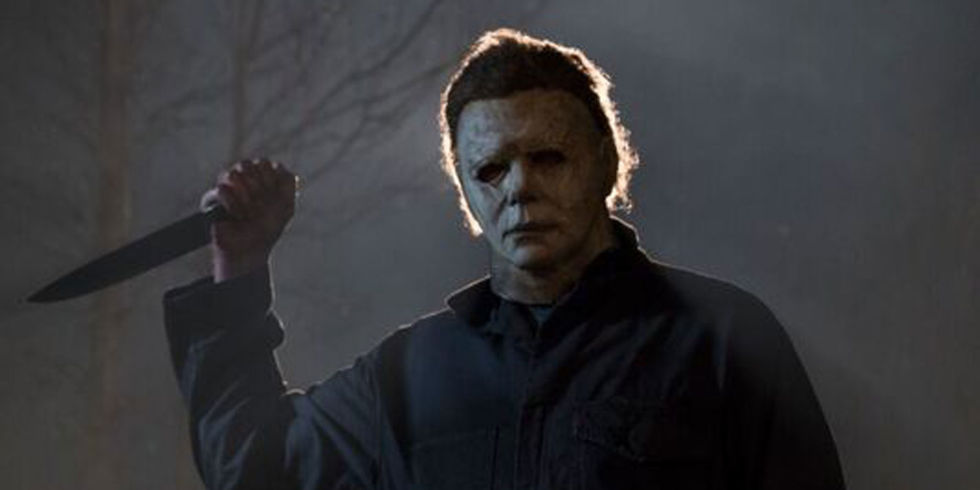
Even though there'd been many times over the years when it looked like Halloween had as much life left in it as a rotting jack o'lantern, it was probably inevitable that in time the franchise would land in the hands of horror fans turned pros who would be primed to fulfill the series' promise in a way that previous filmmakers hadn't, that eventually Halloween wouldn't just be lurching clumsily from one film to the next. 

By rights, Dimension Films should have been an ideal home for Michael Myers but in the end it ended up yielding the usual uneven stretch of films, some of them the most reviled of the series. For all the bad luck the franchise has suffered over the years, you'd think its namesake holiday was Friday the 13th. But in 2016 it looked like things might finally turn around once it was announced that the next Halloween would involve genre powerhouse Blumhouse Productions. 

In time for the series' 40th anniversary, Halloween continuity would once again be rewritten, with the new film now stemming solely from the events of the original Halloween, discarding everything afterward, finally untethering Halloween from its first sequel. 

For years, II was piggybacked onto Halloween, due to its storyline picking up immediately from the end of the original. The two were seen as one seamless story, detailing the events of Halloween night, 1978. And because of that, every sequel had to contend with the misguided reveal in II that Michael and Laurie were siblings. Now, the series was free to forge a new direction that wasn't about Michael obsessed with killing his other sister and the rest of his bloodline. 

And with Jamie Lee Curtis back again as Laurie, there was a fresh chance for her to give the character a more fitting final bow than she received in Resurrection

The trailer was about as good as you could possibly ask for:


Right off the bat this looked like the best return for Michael since H20 and upon its release, the consensus was that, yeah, for the most part they nailed it. Director and screenwriter David Gordon Green and his co-writers Jeff Fradley and Danny McBride and the rest of their Blumhouse collaborators relaunched Halloween in style, complete with a new score from John Carpenter and his son Cody. 

And now we have the just released Halloween Kills, the second chapter in Green's Halloween trilogy, originally meant to hit theaters in 2020 but delayed until this year due to Covid. 

When the trailer hit, it looked well worth the wait:


Woo, that looked like it was gonna be brutal! And as it turns out, it was! Some trailers promise a lot and the movies don't deliver but Kills gave me everything the trailer set me up for. Namely, a massive body count. Even for this jaded slasher buff, the kills in Kills were insane.  

These films are way too new to say for certain how they'll stand up over time, especially as we still have yet to see how the trilogy ends, but as time has softened my views of even the shittiest Halloween sequels, I feel confident that these movies will age just fine. At this point, even if the last film tanks, I'll be happy with the two we got. 

I know Kills rubbed some fans wrong but from my perspective it rocked. Not only did it rock, it fixed my issues with the previous film. 

Even though Halloween '18 established that Laurie and Michael weren't related, the movie still turned on the idea that it was all about Laurie vs. Michael and it felt like the plot shoehorned that confrontation in, facilitated by an out of left field plot twist involving Michael's psychiatrist. 

At a certain point in Halloween '18, there was that need to physically transport Michael from point A to point B so that big confrontation between he and Laurie could play out but the plot mechanism to make that happen was so awkward and it seemed that if that was where the movie was obviously going, if Michael's mission was always to get to Laurie, why couldn't it have been done in a smoother way? 

However, in Kills, it is established that Michael never gave a shit about facing Laurie again. Bringing Michael and Laurie together again was all to do with his psychiatrist's obsession and for all the preparing that Laurie did in her certainty that Michael would one day come back to finish the job, we understand now that he didn't care at all. 

He would have been perfectly fine never seeing Laurie again. His impulse is simply to kill. The scenes in '18 where he is just going into random houses and killing people felt like filler to me at the time, just scenes to pad out the body count, spinning wheels until the movie could get us to that big final act with Laurie and Michael. Now, in light of Kills, those scenes feel right to me. That was what Michael cared about. It was only his psychiatrist that forced him off course. 

As fans we've been as conditioned as Laurie to believe that Michael has a special, singular obsession for her, even if they weren't related. This movie makes it absolutely clear that, no, Laurie is not special to Michael.  

You could say that Halloween '18 already did that but we don't fully feel it there because that movie is so rooted in Laurie's perspective.  

Laurie believes that Michael is coming for her and, because of the history of the franchise, we believe it too. If anything, I thought it was a weakness of '18 that Michael was so passive about getting back to Laurie, that he was manipulated into facing her again rather than choosing to go after her. As it turns out, that was the whole point. 

Laurie's belief that Michael was planning to come for her was given superficial credence by the actions of Michael's psychiatrist but that was his machinations, not Michael's. 

For Laurie, and us, to realize that killing her is no more important to Michael than murdering the next ten random people he encounters is a major corrective move. It liberates the series from the bad baggage it's been carrying since 1981. 

Since Halloween II, the sequels have been trying to explain Michael. 

It is the single biggest mistake the series made. It instantly put the sequels on the wrong foot, and, until now, the subsequent films acted as though they were obliged to forever perpetuate that mistake. 

It's ok for us to get where Jason is coming from. He's protecting his turf, he's avenging his mother, he's punishing misbehavior. Whatever. 

All of that is fine. It doesn't take away from the fun of the character to know all that. The fun of Jason and the scariness of him is knowing that if you set foot in his territory, he's going to get you. 

And with Freddy it's also not detrimental for us to have the full picture on him. He was a sick fuck, the parents of his victims got themselves some street justice and the children have to pay for the sins of the parents. But Michael is a character that works best when we have no idea why he does what he does, when he is a blank.  
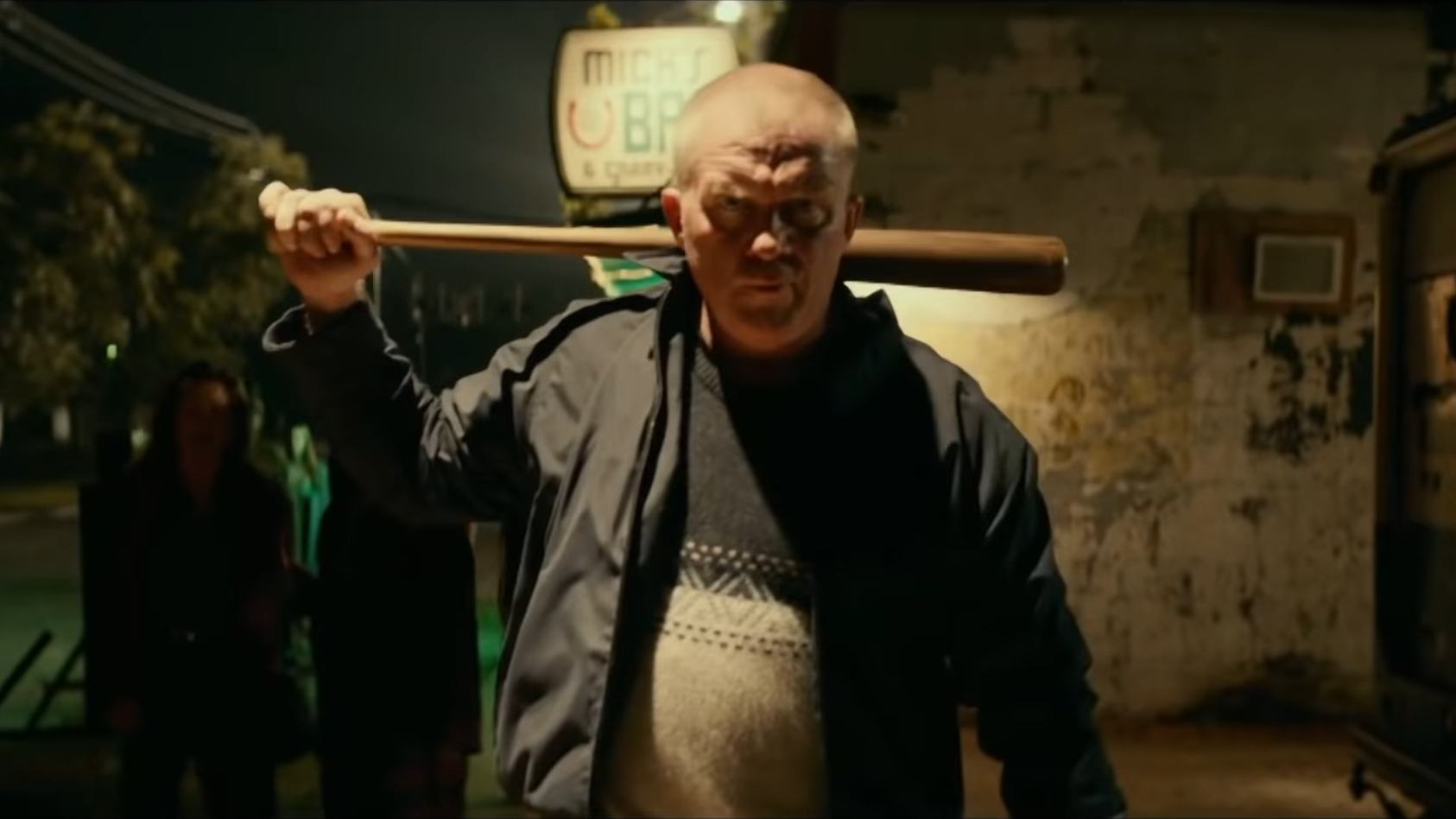
There's a lot of overripe dialogue in Kills from both Laurie Strode and Tommy Doyle concerning Michael. I think that's fine and fully in line with Halloween tradition. They're referring to Michael in the same kind of hyperbolic terms that Loomis used to. Some may roll their eyes when Tommy urgently tells a crowd that Michael is an "apex predator" but I love it. That's some prime Halloween shit right there. 

Past all the talk about evil and transcending, though, Kills has the single best line of dialogue spoken about Michael in the whole series, save for the classic Loomis lines from the original. When Robert Longstreet as Lonnie says about Michael that "he creeps, he kills, he goes home," it's a statement so unsettling in its utter plainness. It describes Micheal in the simplest terms but rather than reduce him, it only affirms his essential sense of mystery. "He creeps, he kills, he goes home" should be the mantra that any future caretakers of Michael Myers should be guided by once Green and co. are done.  

Given how well Kills addressed my issues with Halloween '18, I hope that's reason to believe that Green has had a solid final chapter mapped out from the start. Right now, they're two for two in my opinion. A kick ass third film would be pure Halloween heaven. 

Thursday, October 25, 2018

More Of The Night HE Came Home


With the release of Halloween (2018), the various makers of the many assorted sequels and reboots to John Carpenter's 1978 Halloween are now officially 9 and 0 when it comes to successfully matching the singular, elusive magic of the original (for the purposes of keeping this Myers-centric, we're leaving Halloween III: Season of the Witch out of the discussion). That is not to say the new movie isn't good or that none of the other films in the franchise have been devoid of merit either, only that all of them have tried, in their own ways, to do what Carpenter did and yet all of them have fallen short of achieving that specific goal. That doesn't mean it hasn't frequently been fun and intriguing (if sometimes frustrating) to watch them try.

If anything, seeing how so many filmmakers have struggled to replicate what seems like such a basic model is what makes these films fascinating and it only increases the impenetrable mystique of the original. The whole reason that Carpenter's Halloween spawned a whole sub-genre was, besides the enormous amount of money that it made, was that it seemed so damned easy to copy.

Hellraiser (1987), for example, was a hit but yet you never saw a wave of Hellraiser clones afterwards because who the hell knows how to make more of those? Even making actual sequels to Hellraiser was a difficult task, never mind unrelated copycats. But with Halloween, everybody looks at it and says "Oh, I can do that!" only to find out that they really can't. Halloween seems like the simplest of movies to make endless copies of as Carpenter put the perfect blueprint for the slasher film right there for all to see. And yet it's proved impossible.

It's like a chef who walks you slowly through their recipe, step by step, listing every ingredient and showing you exactly how they created their dish, down to the last pinch of salt, and yet whenever someone else tries to recreate it for themselves, the taste is always noticeably off. Why is that?

Well, I think one big issue is that when people make a Halloween movie, what they're really doing is making a Friday the 13th movie - or at least a movie that attempts to split the difference between the two franchises.

Beginning with Halloween II, the thinking became that Halloween would have to get with the times. What worked in 1978 was already considered passé and Halloween had to play catch up with the slasher competition in order to remain relevant.

To put it simply, Halloween was a movie that said less was more. Friday the 13th said nah, More is more and that's what's become the accepted wisdom. The outrageous sleeping bag kill from Friday the 13th Part VII: The New Blood (1987), for example, would not be out of place in the new Halloween (or in any other Halloween besides the original, for that matter) whereas any of the original Halloween's kills would be very out of place in any Friday film.

Another aspect of the original Halloween that separated it, and the character of Michael Myers, from all the imitators to come but was lost in the other Halloween's was the fact that Michael is playing a game in the first film. He may be evil and he may have the devil's eyes but yet there is a child-like element to him and to his pursuit of his victims in the first film.

The way that he follows people, stalking his victims, always risking being seen (like when he accidentally knocks over the flower pot and quickly moves away before Annie spots him) and sometimes allowing himself to be seen, as part of the game (like when Michael stands in plain view by the hedges when Laurie is walking towards him). As the night goes on, he could kill Annie and Lynda and Bob - and even Laurie - at any time but he chooses to prolong the game he's playing.

He waits, he watches, he chooses just the right time to surprise his victims. Like a child, he hides and then pops out. He hides in the back seat of Annie's car. He waits for Bob to open a closet door so he can spring out like a jack in the box. He puts a sheet over himself to disguise himself when he enters the bedroom to kill Lynda (the fact that Michael doesn't just put a sheet over himself but also takes the goofy step of putting Bob's glasses on in order to "complete" his disguise is a clear sign that this is something that is playful to him).

In line with that, Michael's indestructible nature is also portrayed differently in the original. In Halloween, it's akin to when kids play cowboys and Indians or cops and robbers and one kid will pretend to shoot another and the other kid will fall down and "play dead."

In the first film, Michael can't really be hurt but he pretends to be. Whether he's jabbed in the neck with a knitting needle or stabbed or shot point blank, he goes down the same way every time - flat on his back, unmoving.

In none of those cases is he the least bit injured. He's just trying to fool Laurie, and then Loomis, into momentarily thinking that they "got him" only so he can surprise them by getting up again. In all the films that followed, his unkillable nature becomes more of a robotic thing. When he gets put down, he's really down, no "fooling" about it. The underlying sense of mischief is gone.

But having talked about how the other Halloweens have strayed from the spirit of the original, how is the new film on its own terms? Well, it's a mixed bag but I give it favorable marks. It's just a solid slasher film. There's no back story, no mythology for Michael, no Druid cults, no celestial constellations to guide Michael, and no Busta Rhymes.


I'd say it sits well along side the other anniversary entries - 1988's Halloween 4: The Return of Michael Myers and 1998's Halloween H20: Twenty Years Later - as being a well-meant, game attempt at getting the franchise back on track.


Of those three, 4 is still my favorite. Aside from the fact they had to work with the unfortunate familial element from II, director Dwight H. Little and scripter Alan B. McElroy simply got Michael and got the Halloween vibe just a bit better than anyone else has. That film wasn't perfect, but it was the closest I think I'll ever get to what I really want out of a Halloween sequel. And it had Loomis, an aspect of the series that was so essential to Halloween that any Halloween without it is playing at an automatic disadvantage. No disrespect to Jamie Lee Curtis but Donald Pleasence was, to me, the real glue that held Halloween together. When he passed, he left a void in the series that has yet to be filled. And, well...that's that.

With this latest film, though, you've got an absolutely fantastic soundtrack, courtesy of Carpenter, his son Cody and godson Daniel Davies, that expertly, effortlessly resurrects the classic Halloween sound while also bringing in surprising new layers. You've got Jamie Lee Curtis, giving it her all forty years after the original, and you've got Michael Myers stripped of the barnacles that have clustered onto the character over the years. To my mind, just with all that you've already got yourself a worthwhile entry in the series. And that's what Halloween (2018) is.

So what's not so good about it? What keeps it from being a real gem rather than just a fun slasher pic? Well, first of all let me say that while I applaud the idea of finally freeing the franchise from Michael and Laurie's sibling attachment, I also feel that this movie's Laurie Strode desperately needs II as part of her history to make her story here work. In a weird way, the Laurie of H20 (all references to Michael as her brother aside) is the one that could have believably only endured the events of the original and be living the life she was.

She was a woman still haunted by her experience but yet had compartmentalized it enough where she could function and be a successful adult. The Laurie of 2018's Halloween, however, seems like far too much of a mess to have only lived through what she did in the first one. Not to diminish her trauma but, come on. A very scary thing happened to her but I don't think it's anything that someone couldn't - if not "get over" - then just deal with in a normal fashion.

But if you say the events of II happened to this Laurie, well then - now you're talking! You don't build a isolated compound fortress for the sake of some random psycho who once killed a couple of your friends and tried to put you down too, even as traumatic as that is.

But if you're talking about your psycho brother who wanted you dead so bad that he killed your friends, then slaughtered his way through a hospital staff and then, even after being blown up and engulfed in flames from head to toe, was STILL COMING AT YOU - yeah, that's a guy you're going to spend the rest of your life believing that as long as he's breathing you're not safe. You'd be right to think "I'm probably not done with this guy. Dude's determined. Better be ready for Round Two."


So, as much as II had some unwanted baggage attached to it, for the Laurie of this movie to be what director David Gordon Green and his co-scripters Danny McBride and Jeff Fradley wanted her to be, she really needed to have the events of that movie as part of her story.

But, they aren't and she doesn't and so you just have to go with it. But yet it does create a plausibility problem (outside of wondering how the hell Laurie could have realistically afforded to build her tricked-out fortress and her stockpile of weapons - but on that count, whatever. I don't even know how most TV characters can possibly afford to live in the kinds of houses and apartments they do so I can let Laurie's situation slide). I feel like everyone involved in this movie had a last act in place they knew was killer and just wanted to do whatever it took to get that last twenty minutes or so on screen but unfortunately everything leading up to it is just a little undercooked.

Chief among those undercooked elements is the left-field plot mechanism, involving Michael's psychiatrist Dr. Sartain (Haluk Bilginer), that gets Michael from the streets of Haddonfield to Laurie's compound. If you've seen the movie, you already know how ridiculous this is. I honestly don't know what to say about it except to say that it needed a lot more work. As is, it brings the movie to a screeching halt just when you want it to be hitting the gas. Once everything is in place for the big final showdown, you can kind of say "Fine, whatever it took to get us here!" but it's just a clumsy turn of events that I don't think subsequent viewings will smooth over.

Speaking of events that subsequent viewings won't smooth over, I don't think I'll ever think it was ok for Will Patton's deputy sheriff to drive his police vehicle head on, with killing force, into someone who he suspects is Michael.

Yes, it actually is Michael but at the time, Patton's character is simply taking the word of a traumatized teenager that this masked figure that she's pointing out on a dark street, from the vantage point of a moving vehicle, is 100% the guy they're looking for. I feel like Patton's character really needed to seek out that extra level of identification before gunning his vehicle straight into someone who literally could be anyone. You can't have someone just say "that's him!" and immediately plow your fucking car into someone. Seriously, what the hell is up with the law enforcement in Haddonfield?

Another issue with the new Halloween would be that it has far too many characters that it doesn't know what to do with. Interesting characters will appear and then mysteriously vanish (like Omar Dorsey's Sheriff Barker). The podcasters, for instance, who get the movie's story rolling, really could have been used more. I feel like one of them should have made it to the end somehow (the guy, at least, looks like he could have believably survived Michael's assault in the gas station bathroom) to bookend the movie. Whichever one lived could have echoed Laurie's line of "It was the boogeyman" with Laurie giving the Loomis reply of "As a matter of fact, it was."

Too many characters feel like they're there for no purpose than to facilitate a plot point or to add to the body count (or both). Again, a very Friday-style slasher movie move rather than a Halloween one.

But while all these issues might hold Halloween (2018) back from greatness, it doesn't mean that it isn't fun. For anyone to be a slasher aficionado or a fan of the Halloween franchise - or both, as most fans checking out this movie would be - you have to be someone who has learned over time how to go into a movie with a set of realistic expectations. You're someone who already knows all too well what it's like to be sorely disappointed by a movie and by any measure, this is way better than what usually arrives under the Halloween banner.

Walking out of the new Halloween, all gripes aside, I was still able to say I can't wait for the next one and that hasn't been the case for me for thirty years. Everything after 4 has been a case of either "I hope they get the next one right" or "Best to let it die now" but never "I can't wait to see what they do next!" Speaking of what's next, if nothing else this movie gave Curtis a far better exit - if she wants this to be her finale - than the limp goodbye that Resurrection provided.

Whether or not Curtis returns, it's a given that this movie won't be the last Halloween and that Michael will be back. One thing I will say about further sequels is that they have to re-establish a new Loomis-type character. The suggestion that I'll put out there and hope the universe will hear is that I'd love to see Robert Englund as Michael's new psychiatrist. He's the perfect age now, he's got the perfect look with the white hair and beard. And you need someone in that kind of role that's going to have the charisma and the character actor clout of Pleasence. Even if the new role isn't Loomis per say, it has to carry that same weight. You don't necessarily want Michael to keep going after the same victim movie after movie, but you want the same guy doggedly chasing him and telling anyone who will listen that the Evil has escaped. I'm telling you, Englund should be that guy. Maybe it's just the fanboy in me that wants to see Freddy being Michael Myers' psychiatrist but can you honestly tell me that wouldn't be awesome?


Answer: No, you can't! Don't even try!

Whatever comes next for Halloween, here's hoping it'll break the trend of only the anniversary installments being the decent ones (and before anyone says "But II was good!" - no, it really wasn't). It'd sure suck to have to wait until 2028 for the next good one to come along.


For now, though, The Shape is back in fighting shape.

Thursday, March 30, 2017

Retro-Shock Theater: Vampires (1998)


With the final installment of the Twilight saga now out, horror fans seeking some counterbalance might be craving a film slightly less sympathetic towards bloodsuckers and less interested in wooing the teen girl demographic. To that end, I recommend John Carpenter’s Vampires.

Based on the novel “Vampire$” by John Steakley, Vampires saw Carpenter indulging his long time love of westerns as hard as he ever has. This is a straight up cowboy and Indians style story with James Woods starring as Jack Crow, a vampire slayer under employment by the Vatican who leads a team of fellow slayers in a covert, Catholic Church-endorsed campaign to purge vampires from the face of the earth.

Crow and his crew do a brisk business ferreting out vampire nests and they’ve got a pretty efficient system going for wasting “goons” that involves spearing them in their nests and dragging them out via steel cables on a winch into the sunlight but when Valek (Thomas Ian Griffith), the king of all vampires, puts his boot down hard on Team Crow in a surprise ambush, killing all but Crow himself and Crow’s right hand man Tony Montoya (Daniel Baldwin), Vampires becomes about Crow’s single minded hunt for Valek.

Making this about more than payback is the fact that Valek is in pursuit of a holy item known as the Bérziers Cross that will figure into a ceremony that will give vampires the power to walk in the daylight. And if that happens, then it’s game over for humanity.

Caught up in this battle is Katrina (Sheryl Lee), a hooker who was partying with Team Crow on the night they were decimated and who was bit by Valek. Katrina hasn’t turned all the way yet but the psychic connection she now shares with Valek is something that Crow believes he can use to his advantage. Katrina is dragged against her will along with Crow and Montoya in the hopes that she’ll be able to get them close to Valek before it’s too late. Just to make sure things go smoothly, the Vatican assigns a young priest named Father Adam (Tim Guinee), an archivist for the church, to tag along with Crow.

Of course, the pursuit of Valek proves to be anything but a smooth operation and by the end of it all, loyalty and faith are tested, old bonds are severed and new ones are formed. The action in Vampires lacks the sort of state-of-the-art pizzazz that most modern action pictures strive for (released just a few months earlier, Blade offered a much more stylish slice of vampire slaying) but on the plus side, everything in Vampires is accomplished with practical gags and stunt work. Every inch of this movie is old school – there’s not a single frame of CGI to be found. The vampires are depicted with minimal makeup work and when they burst into flames, it’s not rendered with CG (something that was common even on TV by then with vampires crumbling into CG dust on Buffy the Vampire Slayer).

Vampires is not about spectacle and splatter (even if KNB do come through impressively in that regard – with one of the best gags involving the vertical bisection of one character) so much as it is about the ways that each character finds themselves tested. Carpenter cares less about carnage (the climactic battle is depicted not in an orgy of FX but rather by the off-camera sounds of gunshots and screams) and more about where the characters end up by the movie’s end and how their relationships to each other have been changed.

Much of this choice in focus is no doubt due to budgetary considerations. There was no way that this modestly priced movie ever had the means to compete head to head with top of the line, big studios action pictures but Carpenter wisely didn’t even try. Instead, he and screenwriter Don Jakoby kept the focus on the small cast, giving each of their arcs a distinct meaning.

At the heart of Vampires is the long time friendship between Crow and Montoya and how Katrina and Father Adam both figure into, and ultimately change, that once-insular dynamic. Vampires is a very profane film, filled to the brim with f-bombs and derogatory slurs. It’s been accused of misogyny, homophobia (at one point, Crow taunts Valek by calling him a “pole smoking fashion victim.”), anti-Catholism and general surliness. And, on the surface, it’s true that there is an awful lot of crude attitude on display.

Carpenter’s filmography is famously host to its share of anti-heroes with harsh demeanors but Crow is in a league of his own. Even aside from the very ungallant way he treats Katrina, the physical abuse he personally delivers to (the wholly sympathetic) Father Adam during the course of the film is astonishing. Beating the meek priest at what seems like almost every turn, for various minor infractions, he stops just short of curb stomping him (nowhere else in the annals of film, by the way, is there another movie in which the hero kicks a priest across the dirt like a dog and then afterwards asks if that savage beating sexually aroused him). And Montoya is every bit as thuggish as Crow, as his treatment of Katrina attests.

It’s hard to argue with viewers who find all of this too much to take. Perhaps Vampires was Carpenter’s retort to the rise of the PC mentality in the ‘90s. Who knows? And yet, underneath all the machismo and displays of bad behavior, there lies an unmistakable streak of sentiment. Crow and Montoya aren’t the type of men to ever sit around and talk about their feelings and yet there is a deep connection between them and their final parting scene is every bit as heartfelt as the goodbye at the end of Carpenter’s Starman. Well, that is if Starman had also ended with one character promising to hunt down and kill the other after a brief grace period. But still...

Vampires proved to be a modest hit back in the fall of 1998 but it got a lot of flak and derision as well. That’s par for the course for a Carpenter movie as, more often than not, they have to exist awhile before they’re appreciated but now almost fifteen years since its release, the scrappy Vampires isn’t looking long in the tooth at all. In fact, I see a hint of immortality in it.

Originally published 11/16/12 at Shock Till You Drop


Thursday, March 16, 2017

Retro-Shock Theater: Halloween III: Season of the Witch (1982)


Upon its release in 1982, Halloween III: Season of the Witch proved to be as welcome with Halloween fans as Tootsie Rolls are to trick or treaters. Few movies were given the bum’s rush so quickly and so few films brought together so many fans in near universal disdain. For years, if you asked horror fans how they felt about Halloween III, the stock response would be that they hated it.

So how is it that it’s become practically fashionable to like – even love – Halloween III? Plenty of films see their reputations improve over time but the turnaround in opinion on Halloween III to the point where some fans now call it the best of the Halloween sequels is nothing short of miraculous.

The unlikely road to redemption for this once-despised film comes down to three points… One, bringing back Michael Myers wasn’t such a hot idea. HIII was reviled for having the temerity to let Michael Myers stay dead but as each subsequent Myers-themed sequel, remake and so on did little but sully the legacy of Carpenter’s classic, the more taking a second look at HIII started to look like a good idea.

I mean, I really love Halloween 4: The Return of Michael Myers but when it comes down to it I could’ve lived without it. Similarly, I know that H2O has its fans but wouldn’t you say that the world have done without it? I think so. But now ask yourself if the world could go without Season of the Witch.

Think real hard. Think until the answer is “no, it freaking couldn’t!” then you’ll be right.

Why? Because there’s nothing else quite like it.

That’s the second reason that HIII has found an audience over time. It stands alone. Not just in the Halloween franchise but in the company of horror films in general. It’s just an odd, stubbornly goofy, little movie.

Horror fans have seen every plot told and retold from a hundred different angles so anything that throws even the slightest curveball is going to – sooner or later – earn some love. Every element in H3 isn’t 100% original in and of itself but the fact that so many quirky, divergent components – Stonehenge! Celtic magic! Catchy commercial jingles! Killer robots! An evil toy maker! – all exist in one film gives it the advantage of being something different.

How much of H3’s story came from the original scripter, the legendary Nigel Kneale, and how much came from director Tommy Lee Wallace’s rewrites is irrelevant. All that’s important is that none of the weirdness got scrubbed out along the way.

The third and final – and perhaps the most important – reason for H3’s ascension: Tom Atkins. When H3 was released, Atkins was already a familiar face in genre films but he hadn’t quite achieved the beloved status among fans that he enjoys today.

The fact that H3 gave Atkins one of his few leading man roles makes it hard for Atkins junkies to resist – even more so given how complicated and unique (at least among horror protagonists) his H3 character of Dr. Dan Challis is.

The horror genre is host to many classic heroes – everyone from Abraham Van Helsing to Laurie Strode to Clarice Starling. But Dan Challis is cut from a much different cloth. He’s a middle-aged dad (who doesn’t seem to be all that attentive to his kids), divorced, alcoholic, and something of a lecher.

Atkins’ innate likeability helps disguise Challis’ many unsavory qualities but yet he is undeniably skeevy – which is exactly what makes him such a memorable protagonist. Atkins had already played a borderline letch in The Fog where he exchanged fluids with Jamie Lee Curtis’ character before they even exchanged names but in H3, this (at the time) nearly fifty year old took it to the next level by getting Ellie (Stacey Nelkin), the barely legal daughter of a slain shop owner, into the sack while they’re on the trail of her father’s murderer.

To be sure, Challis is not a guy with a shiny halo around his head. Aside from his appetite for bedding young women, Challis also has a insatiable thirst for booze. Before he and Ellie even hit to road to investigate the murder of Ellie’s father, Challis makes sure to make a packy run first. And when he and Ellie first arrive in the town of Santa Mira, home to the ominous Silver Shamrock Novelties factory, Ellie is eager to start digging around for clues about what happened to her dad but Challis’ immediate response to that is “Whoa! It’s getting late and I could use a drink!”

In what must’ve been a perversely deliberate move on the part of Wallace and Atkins, Challis is shown repeatedly to fail to act in a traditionally heroic fashion and when he does make the effort, he comes up (one channel) short. By coincidence, in David Cronenberg’s Videodrome – released just a few months after H3 – James Woods’ character of Max Renn was just as morally muddied as Challis, and like Challis, Renn is also thrust into the position of saving the world from deadly televised transmissions. The two films make an unlikely but interesting double feature.

Challis’ personal complexities take a back seat to action as the last third of H3 is little more than a series of chases, fights, and desperate escapes but on the other hand, you get to see Challis in a zany death duel with a decapitated killer robot so it’s all good. Thirty years on, this one-time franchise killer has earned its place as an October essential. The Captain Kirk mask may have been retired in this entry, much to the consternation of fans, but Season of the Witch still boldly went where no Halloween had gone before.

Originally published 10/30/12 at Shock Till You Drop 


Thursday, October 31, 2013

Trick or Trailers: Prince of Darkness (1987)


Oh, what a trailer this is - what I wouldn't give to see something this promising coming soon to theaters! Also, why can't every trailer have the movie's title smashing through glass at the end?

If they did, I'd see a lot more movies, I'll tell you that!

By now it's probably not fair to describe John Carpenter's Prince of Darkness as underrated as its reputation as one of John Carpenter's finest films seems well established. In 1987 I remember being soooo excited for Carpenter's return to horror. This was the first Carpenter horror film I was able to see in theaters and it did not disappoint.

Released on October 23rd, 1987, this was not the sleeper hit that Halloween had been but it did respectable business and it marked a commercial bounce back for Carpenter.

For me, this is in the very upper ranks of Carpenter's films. I love the mood, the gonzo ideas, the funky, truly ghastly gore, and the amazing score by Carpenter and frequent collaborator Alan Howarth (not as iconic as Halloween's but every bit as good). A great cast here, too, with Carpenter reuniting one last time with both Donald Pleasence and Victor Wong.

Being that it's Halloween and I have many things to do, I don't have time for a long post. Then again, after 31 posts this month I've probably already said too much! To anyone who's stuck around with me this October, I hope it was a kick to spend time reminiscing about the Halloween releases of years past - some of them classics, some of them, ehhh, not so classic, but all were fun to look back on.

Here's hoping for a great crop of new horror next October!

Have a happy and safe Halloween, everyone!

Wednesday, October 30, 2013

Trick or Trailers: Halloween 4: The Return of Michael Myers (1988)


The fact that this year marks the 35th anniversary of John Carpenter's Halloween has been just cause for celebration. However, the fact that this year also marks the 25th anniversary of Halloween 4 hasn't gotten nearly as much notice. Subtitled The Return of Michael Myers, this was an effort on the part of Moustapha Akkad to save the series, after the Michael Myers-free Halloween III: Season of the Witch had been roundly rejected.

From a commercial standpoint, going back to basics was an excellent call on Akkad's part and while subsequent entries might've made fans wish that Michael could be permanently retired, 4 was a very good effort all around. For me, it's the pinnacle of the Myers sequels. Director Dwight Little is no John Carpenter but he did an admirable job just the same. The atmosphere is dead on, the suspense is effective, and there's a clear reverence for the original.

Alan McElroy's script picks up where II left off, building on the familial aspects that Carpenter's screenplay introduced in II, but without burdening his screenplay with the kind of mystical mumbo-jumbo that 5 & 6 went for. And the cast is terrific, populated with a set of genuinely likeable young protagonists (why Ellie Cornell's career never took off, I don't get) and topped by the irreplaceable Donald Pleasence.

I'm predisposed to having fond memories of 4 because it was the first installment of the series I was able to see in the theater but I think by any objective standard this remains the gold standard of the series. If they were going to continue the saga of Michael Myers, this showed how to do it right and bringing back Pleasence as Loomis was the real masterstroke. While it would've been easy to leave the character dead, having Loomis miraculously survive an explosion that should've reduced him to ash was the smartest decision anyone involved in this film made, giving it a stamp of legitimacy. As soon as you saw Pleasence ranting about Michael in the trailers and TV spots for this, you knew Halloween was on again.


Friday, October 25, 2013

Trick or Trailers: Vampires (1998)


Back in the '90s, it was still a given that any new John Carpenter film would open in theaters. No question. Even though he hadn't had a hit in a while, whenever a new movie from him would arrive, there was hope that this would be his "comeback" and Vampires kind of fit the bill in that regard. Released on October 30th, 1998, it opened at #1 at the box office. By its second week, though, it had dropped considerably with the Halloween weekend that had boosted its profile now past and with it getting poor word of mouth due to the fact that it was more of a western than a horror film.

For me, though, this remains one of my favorite Carpenter efforts. Late-era Carpenter has been enjoying a renewed appreciation over the past few years and among that bunch, Vampires definitely rates a more favorable reputation.

James Woods' performance as misogynistic, misanthropic, homophobic and all-together ill-tempered vampire hunter Jack Crow has received criticism for going too far even for a John Carpenter anti-hero, a character that some find abrasive to the point of offensiveness. While it's true that he's way over-the-top, I enjoy Woods' comically surly, doggedly anti-PC approach and I like the chemistry he has with the much more laconic Daniel Baldwin.

As a fan who (somewhat greedily) wishes that Carpenter was still active (well, a little more active, at least) and still getting his films into theaters, it bums me out that we live in a world where we're not likely to ever see another new Carpenter film on the big screen again. At this point it seems like his career has, for the most part, run its course. It might seem unfair to those of us who'd like to see more from him but from interviews, Carpenter seems perfectly content these days and as any undead bloodsucker would be quick to point out, everyone's time in the sun has to end sooner or later.

The legacy of a great body of work, though, is eternal.

Wednesday, November 30, 2011

The Night HE Came Home...In 3-D

This past weekend I saw Martin Scorsese's Hugo and found it to be not just one of the best films of the year but also one that proves how terrifically effective 3-D can be and how some films can benefit from it.

Beforehand, a trailer for the 3-D release of Titanic screened and while Titanic is a movie I have no interest in revisiting, seeing how stunning it looked in 3-D was nearly enough to convince me to see it again on the big screen.

In the lobby was a standee promoting the February release of The Phantom Menace - again, another movie that I have no special interest in but yet I can't help but be intrigued as to how it'll play in 3-D.

With these two films returning to theaters in 3-D next year, along with Disney's dimensionally enhanced Beauty and the Beast, I had to wonder when a classic horror movie might get the same treatment and which movie would be the ideal candidate for that and my immediate thought was of John Carpenter's Halloween (1978).

Halloween is damn near custom made for 3-D, beginning with the floating jack o' lantern in its title sequence that moves from deep in the back of the screen...

...All the way to a tight close-up of one of its glowing eyes to the point where we can see the details of the pumpkin's lit insides.

Carpenter's prowling, seemingly weightless Panaglide shots are ideal for the 3-D format - beginning with the famous POV opening scene...

...In which Michael Myers begins his career in evil.

There's so much in Halloween that would naturally play well in 3-D, from the sight of the escaped Smith Grove patients wandering in the rain...

...To the fall leaves that blow through so many shots (actually painted leaves that had to be rounded up by the crew after each take and reused)...

...To the various moments when we're placed just behind Michael's shoulder as he watches his prey in the background...


...To shots like this, with Michael standing amid billowing sheets...

...Or this one, where we're placed in the backseat of Annie's car (I find it eerie, by the way, that in this scene we find ourselves "sitting" exactly where Michael will later wait for Annie).

There's already a deliberate sense of depth to the composition of the shots in Halloween, wherein suspense is achieved by emphasizing the importance of background vs. foreground - and that's something that 3-D would only enhance.

Carpenter and cinematographer Dean Cundey also staged many of their shots so that the audience would be observing the film's action through the separating element of a window...

...Or sometimes multiple windows...

And Halloween is a film in which danger often materializes in the background of shots, rather than just lunging out (although there's plenty of that, too).

Carpenter has often cited 1953's It Came From Outer Space as a seminal moment in forming his love of movies. As he said in John Carpenter: The Prince of Darkness, by Gilles Boulenger:

"...At the beginning it was lightly in 3-D. but when this meteor appeared to come out of the screen and exploded, the impact gave me the impression that a lightning ball had struck me, and I got terrified...That's where I think probably the beginning of that love for horror and scaring people came because I got so scared and it was so much fun to be scared."

Given the impact that 3-D had on both his love of horror and on his eventual career, how fitting would it be for his most celebrated film to be re-released in 3-D?

In his review at the time, Roger Ebert described Halloween as "a visceral experience" and said "we aren't seeing the movie, we're having it happen to us." To see it in 3D would only amplify that.

The idea of converting Halloween to 3D will surely strike some as an unconscionable move, a cheap gimmick that would only desecrate a classic. But I maintain that it would be a treat and not a trick. It'd be The Shape like you've never seen him.

And do I even have to point out how cool it would be to see Donald Pleasence's irreplacable Loomis in action in 3-D? No, I didn't think so.

Thursday, July 7, 2011

The Ghost In You

As I'm sure you're aware, John Carpenter has a new movie out now called The Ward. It's been on VOD for a while but it's hitting select theaters this weekend. Good sense dictates that you try and check it out anyway you can.

The script, by Shawn and Michael Rasmussen, is, well...it's not so good. The not so good part mostly centers on the flabbergasting twist at the end - which isn't flabbergasting at all, save for the fact that you can't believe anyone involved thought it was a good way to go. But...it's not a deal breaker for me. Carpenter handles the resolution of the film's mystery as well as anyone could without calling for a complete rewrite.

Shaky story aside, Carpenter delivers a handful of effective jump scares, gets a strong lead performance out of Amber Heard, and wisely doesn't try to overreach with this slim material. Carpenter's prowling camerawork is in full effect, gliding through the possibly haunted corridors of the North Bend psychiatric hospital.

The Ward might not seem like much, just another underwhelming latter-day entry from Carpenter - a movie that some might say was hardly worth Carpenter getting back in the director's chair for - but I guarantee that time will be kind to it. Not so kind that it'll ever be a classic but it strikes me as the kind of movie that would've once found its audience one viewer at a time in the twilight zone of late night TV - a place where modest but efficiently told B-movies could always get a fair shake, away from heavy expectations.

I do wish that Carpenter had found a meatier project for his comeback but looking at the straight-forward chills that The Ward serves up, it's reassuring to be reminded that Carpenter's far too pragmatic to ever go off his nut like Romero, Argento, or Craven have in recent years. The Ward may not set the world on fire but it's no embarrassment either. Here's hoping that Carpenter will not keep us waiting another ten years for his next movie.

To read my full review of The Ward, go to Shock Till You Drop.

Tuesday, May 24, 2011

The Gentlemen's Guide To Vampire Slaying

With rare exception, John Carpenter's films have traditionally met with disdain or indifference and have had to wait - sometimes for years - to be embraced by fans and critics. Thirteen years after its release, I think it's time to get an answer on 1998's Vampires.

Of Carpenter's latter-day pictures, Vampires is usually held up as proof that, even if he isn't coming up with a classic like The Thing, he's still got some chops. But fans of the John Steakley novel Vampire$ insist that Carpenter squandered the potential of the book. Still others fault Vampires for indulging in misogyny, citing the abuse that Sheryl Lee's character suffers throughout the movie.

I can't speak as to whether Vampires does its source novel justice because I've never read it but the misogyny charge is more easily addressed. The bottom line is that it's kind of a bum rap. Oh sure, the hooker character of Katrina that Lee plays isn't exactly treated like a lady but her abuse at the hands of James Woods' merciless vampire slayer Jack Crow has been misreported and misremembered. The character that Crow really uses his pimp hand on is Father Adam Guiteau (Tim Guinee), a young priest assigned to aid Team Crow.

Reviews of Vampires commonly cite the ugly incidents of abuse regarding Lee's character (a recent mention of Vampires in Fangoria noted that "seeing hooker Sheryl Lee getting the crap beaten out of her every five minutes ain't funny") but the actual film tells a slightly different story. In the wake of a car crash, Crow slaps the recently bitten Katrina a couple of times to get her to wake up and walk. Later, he pulls open her mouth to check for fangs and then pushes her face away when he's done but there's none of the beat-downs that some people seem to remember. The only time that Katrina is struck by anyone is when Crow's right hand man Montoya (Daniel Baldwin) slaps her after she's infected him with a vampire bite.

Contrast that with the abuse that Father Adam receives. This poor milquetoast gets the full treatment. At one point, Crow violently yanks him out of the passenger seat of the truck he's in, throws him down on the side of the road, and kicks him across the dirt as he helplessly tries to crawl away. Later, in a hotel room, when Father Adam attempts to make a phone call to Cardinal Alba (Maximilian Schell), Crow takes the phone from Father Adam and cracks him across the face with it, sending him flying into a nearby wall. Still later, there's a confrontation in another hotel where Crow is looking to get information out of Father Adam and he chokes him, stuffs a washcloth in his mouth, then takes a knife and slices open his hand. I believe he also delivers a punch to his gut sometime during all this. Crow doesn't have the time to beat the shit out of Katrina - he's got his hands full with Father Adam.

Some would say that any way you look at it, Crow is just too unlikable and that Carpenter made a miscalculation in letting his behavior be so over the top. Carpenter is no stranger to anti-heroes but even many fans of Napoleon Wilson and Snake Plissken find Jack Crow to be too much to stomach. I say that Vampires does have its faults but that its abrasive characters aren't one of them. While I wouldn't refer to the movie as camp, there's clearly an element of over-the-top humor here that has gone slightly unappreciated. I mean, when you have a nice Catholic priest being beaten like a dog and then afterwards be asked by his abuser if that sexually aroused him, you've got to concede that the movie is deliberately crossing a line.

A case could be made that Carpenter let Woods improv a little too much, allowing him to play his role like a parody of a macho hard-ass (in contrast, Baldwin delivers a sincere, low-key performance as the loyal Montoya) but it's also hard to deny that his performance helps to make Vampires memorable. Even if it sometimes feels as if he's trying too hard to get a laugh ("Garlic? You wanna try garlic? You could stand there with garlic around your neck and one of these buggers will bend you fucking over and take a walk up your strada-chocolata!"), at the end of the day you've got James Woods as a vampire hunter so even if it isn't perfect, it's still pretty awesome.

From the start, Carpenter has shown a kinship with anti-authority figures - from criminals to rock and rollers - and Vampires may represent his most gleeful celebration of that rebel streak (it's neck and neck with 1996's Escape from L.A. - sending the whole planet into the Dark Ages is awfully hard to top as a "fuck you"). In the wake of L.A.'s failure to reestablish him as a commercial force, Vampires seems to be a case of Carpenter acknowledging, with a middle finger held high, that he's out of step with Hollywood, out of step with the public, out of step with what's fashionable, and not giving a fuck about any of it. This is not a movie that was made by someone looking to ingratiate himself to the masses.

At the time of its release, Vampires suffered from comparison with the much slicker Blade, which had proceeded it into theaters by a few months. That film was state-of-the-art in a way that the lower-budgeted Vampires wasn't and I think that initial perception of not being "top of the line" still haunts Vampires. But while Vampires' action isn't so hot (watching one vampire after another be dragged out of their nest via a steel cable gets to be sluggish), the practical FX from KNB are nicely accomplished. More importantly, the relationships between the characters play out in a satisfying fashion and that's something that doesn't date with the passing years.

Yeah, in the short run it might have been cool if a bigger budget had allowed Vampires to compete head on with other films in the market then but I still love it when Father Adam steps up and blows a hole through the traitorous Cardinal Alba's chest, or when Montoya fights on after having his neck ripped open and he rides to Crow's rescue.

Those are the moments where Vampires' heart lies and whether the film is ever seen as classic Carpenter or not, that's something that time won't be able to drive a stake through.